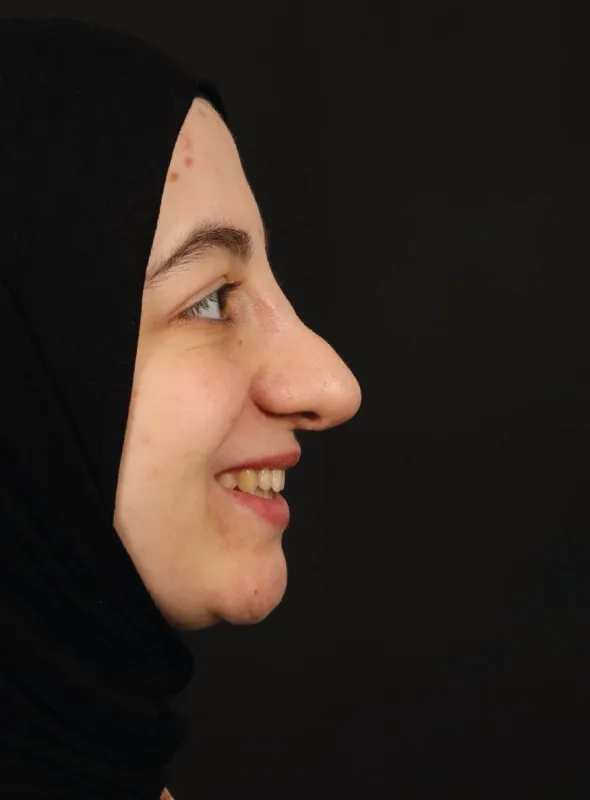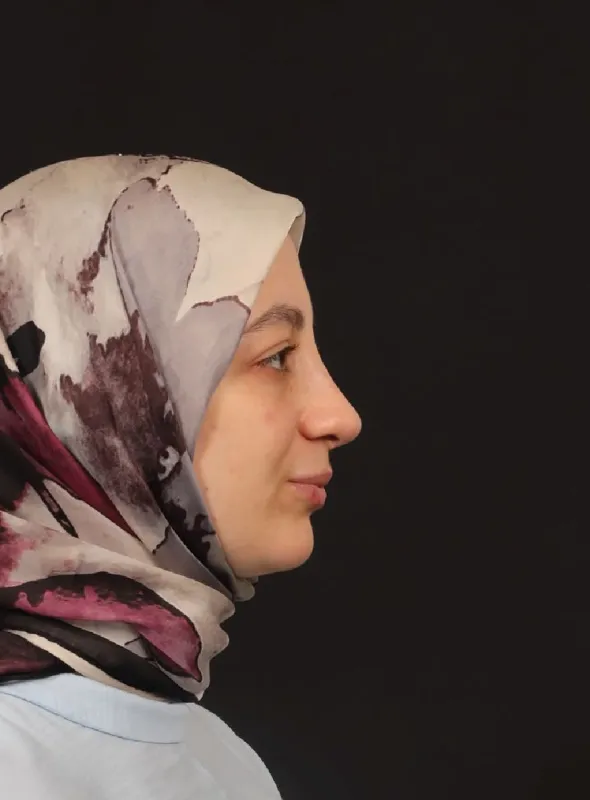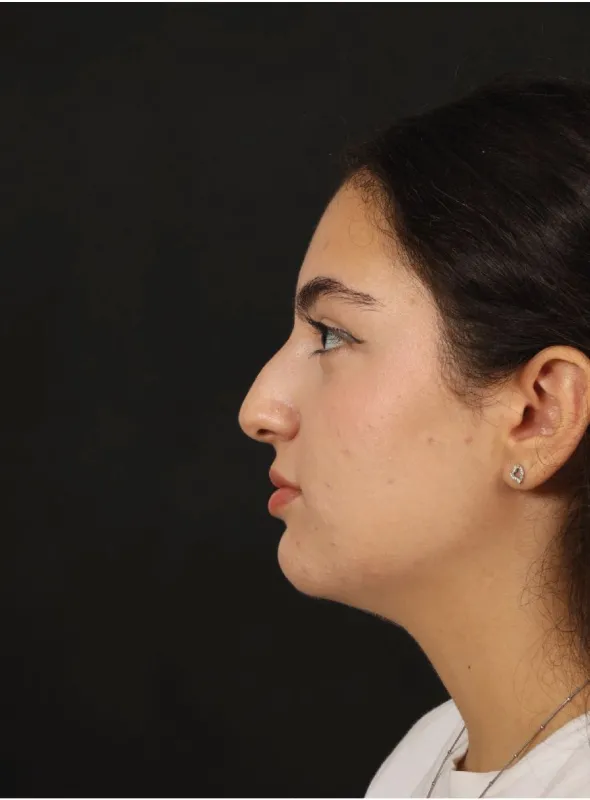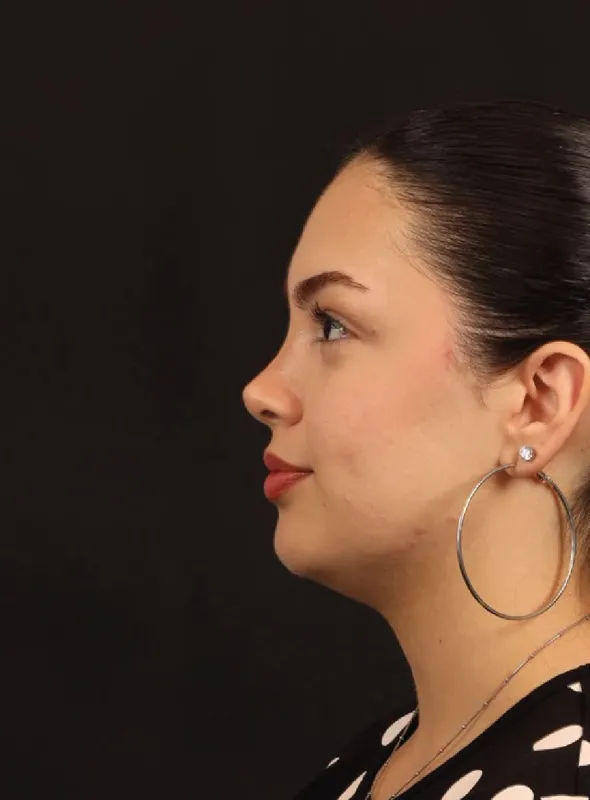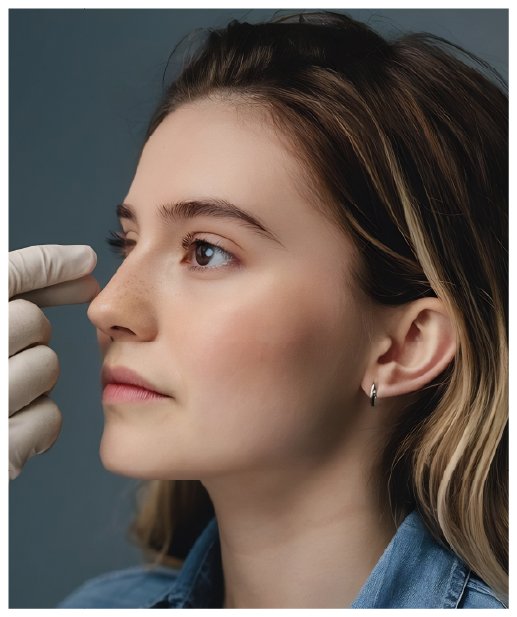
Revision rhinoplasty is a second operation on a nose that has already been operated on once or more. It addresses shape problems, breathing difficulty, or both, that appear after the first surgery. Like any nasal operation it requires information, examination and individual planning; but revision surgery has its own particular difficulties, and I want to describe them plainly on this page.
When is revision rhinoplasty considered?
After a first operation some patients are unhappy with the appearance, others begin to have trouble breathing. The situations we see most often are:
- Breathing difficulty: narrowing of the nasal valve, a septum that was not sufficiently corrected, or internal structures that were reduced too much can narrow the airway.
- Dorsal (bridge) problems: a hump that was under-corrected, a saddle or scooped bridge from over-resection, or irregular bone edges.
- Tip problems: asymmetry, an over-rotated or drooping tip, weakened tip support, or a difference between the nostrils.
- Over-reduction: the "operated nose" look caused by removing too much cartilage and bone, often accompanied by loss of function.
- Healing-related issues: prolonged swelling in thick skin, irregular scar tissue, firm areas under the skin.
Some of these problems improve on their own in the months after the first operation; this is why waiting is usually necessary before deciding on a revision.
How does it differ from a first operation?
Revision rhinoplasty is technically more complex than primary rhinoplasty, for three main reasons:
- The tissues have changed. Scar tissue from the previous operation removes the natural planes between skin and cartilage; dissection must be more careful.
- Cartilage may be scarce. If septal cartilage was used in the first operation, additional graft sources such as ear or rib cartilage may be needed for new support and shaping.
- The previous plan is often unknown. The operative report and pre-operative photographs provide valuable information; without them, the situation inside the nose is only fully seen during surgery.
Examination and planning
Revision assessment begins with a careful examination. The external appearance, skin thickness, cartilage support and tip elasticity are assessed by hand and eye; in patients with breathing complaints the septum, turbinates and nasal valve are examined with an endoscope. I ask to see the previous operative report and pre-operative photographs when they are available.
In general, at least twelve months should pass after the first operation, because swelling takes this long to subside and tissues to soften. An assessment made before this period may misread a result that has not yet settled. Expectations are discussed openly during the examination; what can be corrected and what may remain limited is stated clearly.
How is the operation performed?
Because the structures need to be seen directly, the open technique is usually preferred for revisions; for limited corrections the closed technique may also be suitable. The choice is made during examination. The operation is performed under general anaesthesia; its duration depends on the extent of the corrections and the need for grafts, and is usually longer than a primary rhinoplasty.
The backbone of the operation is rebuilding structural support. Weakened tip support is reinforced with cartilage grafts, a collapsed bridge is reshaped, a narrowed valve is opened. When bone work is required, the piezo (ultrasonic) technique can be used. A deviated septum or enlarged turbinates contributing to breathing problems are addressed in the same operation.
The post-operative period
The post-operative course is similar to primary rhinoplasty: a splint on the nose for about a week, swelling and bruising in the first days, marked recovery within a few weeks. In revision cases, because the tissues have already been altered, swelling can take longer to subside and the final shape may take up to a year to settle. Follow-up visits matter during this period; you can find detailed information on the stages of recovery in the rhinoplasty recovery process guide.
An ENT surgeon's approach to revision
As a surgeon trained in Ear, Nose and Throat, I address two goals together in revision cases: bringing the appearance into harmony with the face, and protecting or re-opening the airway. While making aesthetic corrections I take care to preserve the supporting role of the septum, not to narrow the valve area, and not to remove more of the internal structures than necessary. The aim in revision surgery is to resolve the problems left by the first operation without creating new ones.
This page is for general information; every patient is different and treatment decisions are made during examination. For other rhinoplasty topics see the Rhinoplasty: Overview page, for a first operation see Rhinoplasty (Nose Job), and to arrange an examination please use the contact page.